

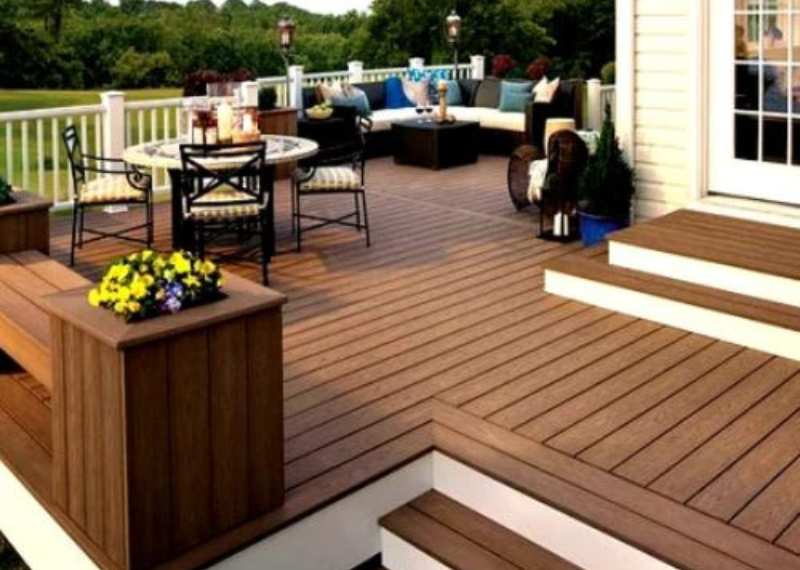
WPC - (Wood Plastic Composite)

WPC (Wood Plastic Composite) is a modern composite material that blends recycled wood fibers with thermoplastics like polyethylene or PVC to create a durable, low-maintenance alternative to traditional wood. It offers the natural aesthetic of wood grain and texture without issues like rotting, warping, splintering, or insect infestation. WPC is highly resistant to moisture, weather, and UV rays, making it ideal for decking, cladding, and outdoor furniture. With easy installation, slip resistance, and a long lifespan requiring minimal upkeep, WPC provides a sustainable, eco-friendly solution that combines wood-like beauty with plastic's durability.


Features of WPC (Wood Plastic Composite) Decking

1. Durability:
Resistant to Moisture and Rot: Unlike traditional wood, WPC decking is highly resistant to water, preventing issues like warping, swelling, or rot. This makes it ideal for wet environments or areas with high humidity.
Insect Resistance: WPC is resistant to termites and other wood-boring insects, thanks to its plastic content.
Weather Resistance: It withstands exposure to harsh weather conditions, including UV rays, rain, and snow, without fading or cracking.
2. Aesthetic Appeal:
Wood-like Appearance: WPC is designed to mimic the appearance of natural wood, offering various shades and textures that replicate wood grain. However, it lacks the imperfections of real wood, such as knots or splinters.
Consistency: WPC provides a uniform appearance, which is especially useful for large decking areas where consistency is important.
3. Low Maintenance:
Minimal Maintenance: WPC decking requires little to no maintenance compared to traditional wood. There’s no need for sanding, sealing, or painting. Regular cleaning with water and soap is usually enough to keep it looking new.
No Splintering or Cracking: The composite material eliminates the risk of splinters, making WPC safer and more comfortable for barefoot use, especially around pool areas or for families with children.
4. Sustainability:
Eco-Friendly Option: WPC often contains recycled wood fibers and plastics, making it an environmentally friendly alternative to solid wood decking. By using WPC, you're reducing the demand for virgin wood and diverting plastic waste from landfills.
5. Installation:
Easy Installation: WPC decking is relatively easy to install using standard tools, and it can often be installed with hidden fasteners for a cleaner look. Some systems come in interlocking planks or tiles, simplifying the installation process.
Dimensionally Stable: The plastic content makes WPC more dimensionally stable than wood, meaning it doesn’t expand and contract as much with temperature changes.
6. Cost Efficiency:
Lower Long-Term Cost: While WPC can have a higher upfront cost compared to softwoods like pine, it typically results in lower long-term costs due to its durability and minimal maintenance needs.
7. Safety:
Slip Resistance: Many WPC decking products are designed to be slip-resistant, making them a safer option for pool decks or other outdoor areas where moisture is present.

call icon
whatsapp icon
whatsapp icon