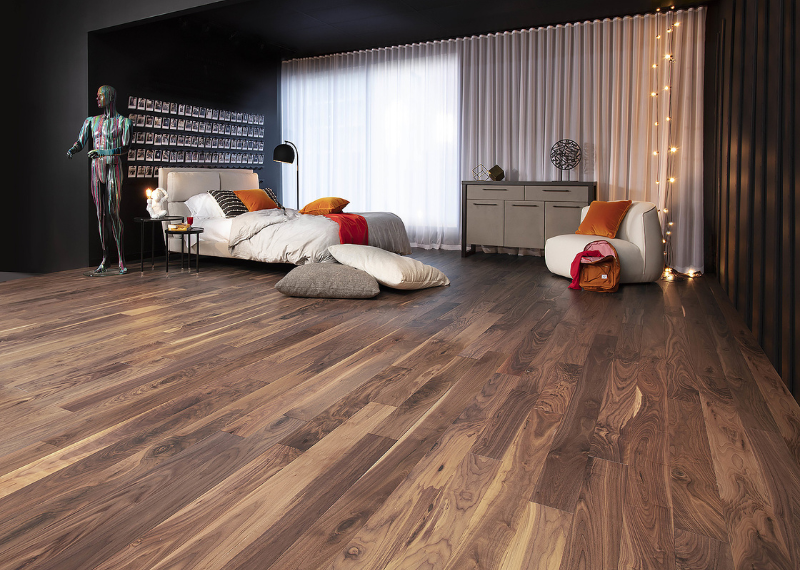
1. Characteristics
Color:
Heartwood: Rich dark brown with hints of purple or chocolate.
Sapwood: Pale, creamy-white.
Darkens over time with exposure to light.
Grain:
Straight grain is common, though some boards may have irregular or wavy patterns.
Attractive natural luster.
Texture: Smooth with a fine-to-medium grain.
2. Durability
Hardness: Rated at 1,010 lbf on the Janka scale.
Resistance: Naturally resistant to decay and termites (heartwood), though sapwood may require treatment.
Wear: Stands up well to wear and is less likely to warp over time.
3. Workability
Machining: Easy to machine, carve, and turn.
Finishing: Polishes beautifully and takes stains and finishes well.
Gluing and Nailing: Performs well with glue, screws, and nails.
4. Applications
Furniture: High-end cabinetry, tables, chairs, and beds.
Flooring: Luxurious and durable for residential or commercial spaces.
Decorative: Veneers, paneling, and intricate carvings.
Instruments: Popular for musical instruments due to its tonal quality.
Other: Kitchen utensils, cutting boards, and high-end gunstocks.
5. Types of Walnut
American Black Walnut (Juglans nigra): The most popular for interiors and furniture.
English Walnut (Juglans regia): Known for lighter tones and fine woodworking.
Claro Walnut (Juglans hindsii): Noted for its stunning figure and unique patterns.
6. Sustainability
Walnut is often harvested sustainably, but availability can depend on region and logging practices. Reclaimed or FSC-certified walnut is a great eco-friendly option.
7. Pricing
Generally on the higher side due to its desirability and quality.
Pricing varies by region, board grade, and whether it is solid or veneered.