

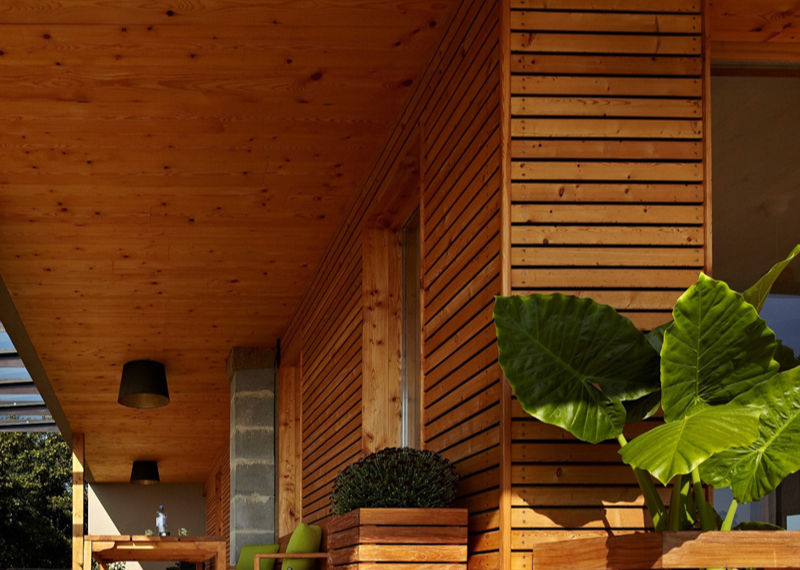
Thermo Pine
Thermo Pine

Thermo Pine, or thermally modified pine, is a type of pine wood that undergoes a heat treatment process to enhance its natural properties. This chemical-free modification significantly improves the wood's durability, making it highly resistant to rot, decay, fungi, and insects. The process also reduces its moisture content, leading to superior dimensional stability and reduced risk of warping or swelling. Thermo pine develops a darker, richer color resembling tropical hardwoods, offering an aesthetically pleasing option for outdoor and indoor use. As an eco-friendly, lightweight, and cost-effective material sourced from sustainable forests, it is a versatile choice for decking, cladding, and furniture, though periodic UV protection may be needed to maintain its color.


Features of Thermo Pine

1. Improved Durability: The thermal modification process alters the wood's cell structure, making it more resistant to rot, decay, and fungal attack. This significantly extends its lifespan, even in moist environments.
2. Enhanced Moisture Resistance: Thermo pine has a reduced moisture content due to the thermal process, which makes it less prone to absorbing water. This reduces the likelihood of swelling, warping, and shrinking over time.
3. Increased Dimensional Stability: Since thermo pine absorbs less moisture, it remains more stable and retains its shape better in fluctuating weather conditions, including high humidity and rain.
4. Eco-Friendly: The thermal modification process doesn't require chemical treatments, making it an environmentally friendly option. The process is purely heat-based, which enhances the wood's natural properties.
5. Lightweight: Thermo pine remains relatively lightweight compared to other woods, making it easier to work with during construction.
6. Aesthetics: The heat treatment gives thermo pine a darker, richer color, often resembling tropical hardwoods. This deep, warm tone can enhance the look of decks, cladding, and outdoor furniture.
7. Insect Resistance: The modification process also makes the wood less appealing to insects, adding an extra layer of protection in outdoor environments.

Considerations for Thermo Pine in Outdoor Use

UV Exposure: Like most woods, thermo pine can fade or turn gray over time when exposed to sunlight. To maintain its rich color, a UV-protective oil or finish should be applied periodically.
Surface Hardness: While thermo pine gains increased durability, it may not be as hard as tropical hardwoods like Ipe. This could make it more susceptible to surface wear and dents.
Sustainability: Since thermo pine is typically sourced from sustainable forests, it’s a more eco-conscious choice compared to exotic hardwoods.
Cost-Effective Alternative: Thermo pine provides a cost-effective alternative to tropical hardwoods, offering similar durability and resistance to environmental factors at a lower price point.

call icon
whatsapp icon
whatsapp icon