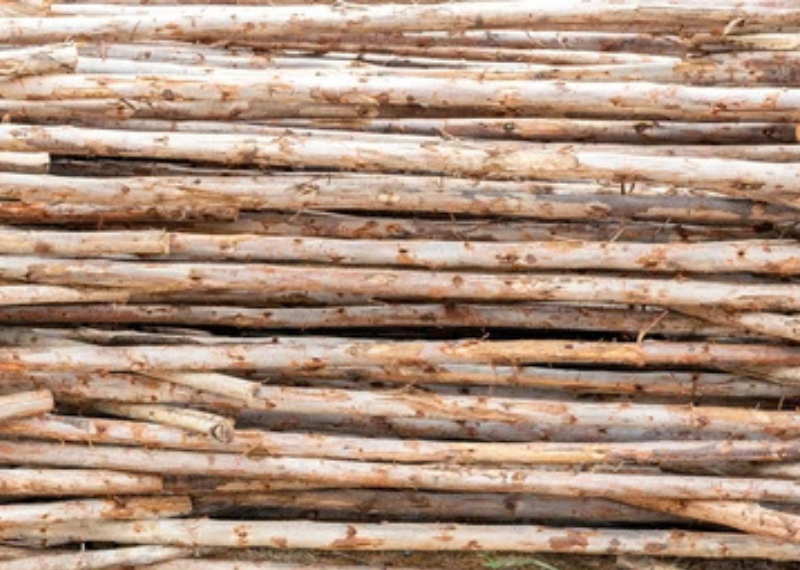
Reasons for Peeling Logs
Construction:
Logs are peeled for building log cabins, homes, or fences to ensure a uniform surface and reduce insect infestation.
Durability:
Removing the bark prevents it from retaining moisture, which can lead to rot or mold.
Aesthetics:
Peeled logs have a smoother and cleaner appearance, often desired for furniture or decorative uses.
Preservation:
Without bark, wood treatments (e.g., stains or preservatives) penetrate better, improving longevity.
Common Methods
1. Manual Tools:
Drawknife: A traditional, handheld tool for carefully shaving off bark.
Spud Tool: Used for loosening and prying off large sections of bark.
2. Mechanical Peeling:
Machines or power tools can be used for faster results, especially for large-scale projects.
3. Natural Drying and Bark Removal:
In some cases, logs are left to dry, causing the bark to loosen naturally.
Key Advantages
1. Prevents Decay and Rot
Bark Retains Moisture: Bark traps moisture, creating a breeding ground for fungi, mold, and bacteria. Removing it allows the log to dry evenly and prevents decay.
Improves Durability: Peeled logs last longer when exposed to the elements or when used in construction.
2. Protects Against Pests
Insects Hide in Bark: Bark provides a natural habitat for pests like beetles, termites, and ants. Removing it makes the wood less attractive to these pests.
Reduces Infestation Risks: By peeling the logs, you help eliminate the larvae and eggs that could be hiding underneath.
3. Enhances Aesthetic Appeal
Smooth Surface: Peeled logs have a clean, uniform look that enhances their visual appeal for interior or exterior design.
Rustic Charm: Even with the bark removed, the log retains its natural grain, offering a timeless and rustic aesthetic.
4. Easier to Treat and Finish
Better Absorption of Finishes: Without bark, wood treatments like preservatives, stains, or sealants penetrate more effectively.
Improves Longevity: Properly treated and peeled logs resist weathering and UV damage better.
5. Facilitates Construction
Smooth Surface for Joining: Peeled logs are easier to handle and fit together more precisely, especially in log cabin construction.
Reduces Weight: Removing the bark slightly reduces the log’s weight, making it easier to transport and work with.
6. Encourages Even Drying
Prevents Warping: Bark can cause uneven drying, leading to cracks or splits in the wood. Peeled logs dry uniformly, minimizing structural issues.
Prepares for Kiln-Drying: If the logs will be kiln-dried, peeling ensures better results.
7. Environmental and Health Benefits
Reduces Mold and Allergens: Bark can harbor mold spores that may affect indoor air quality. Peeled logs are cleaner for interior use.
Less Debris: Removing bark reduces loose material that could create messes or environmental waste.