

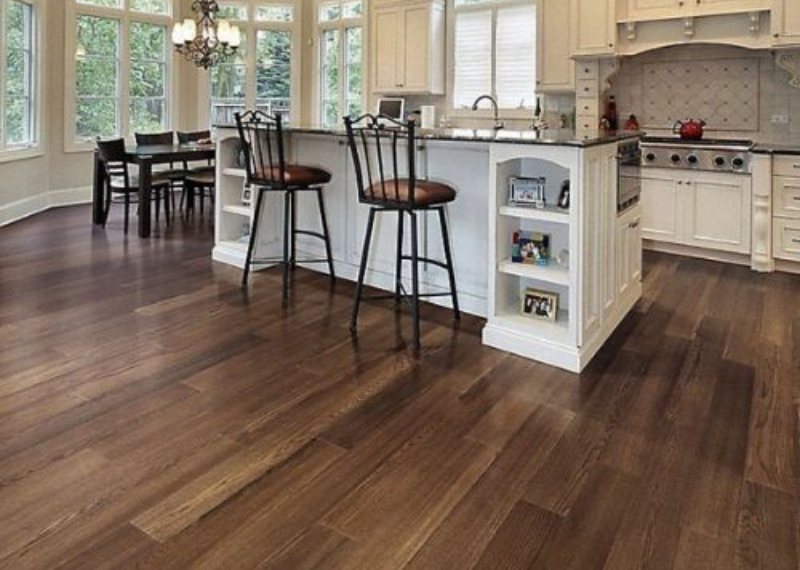
Engineered Wood Flooring

Engineered wood flooring is a versatile and durable flooring alternative to solid hardwood, featuring a multi-layer construction with a top veneer of real hardwood (like oak, maple, or walnut) bonded over a core of high-density plywood or fiberboard. This cross-grain structure provides enhanced stability, making it more resistant to moisture, humidity, and temperature changes than solid wood—ideal for areas such as basements, kitchens, and over radiant heating. It offers the authentic look and feel of natural wood with various finishes and textures, versatile installation options (glue-down, nail-down, or floating click-lock), and a cost-effective price point, especially for premium wood species.


Features

Construction:
Engineered wood consists of multiple layers. The top layer is a veneer of real hardwood, while the core layers are made from high-density plywood or fiberboard, providing strength and stability.
The layers are bonded together in a cross-grain configuration, which minimizes expansion and contraction due to temperature and humidity changes.
Appearance:
Since the top layer is real wood, engineered wood flooring looks just like solid hardwood. It comes in various wood species, finishes, and textures, including oak, maple, walnut, and hickory.
Durability:
Engineered wood is more resistant to moisture and temperature fluctuations than solid hardwood, making it suitable for areas like basements and kitchens where solid wood might warp or crack.
The thickness of the veneer layer affects how many times it can be sanded and refinished. Thicker veneers can be sanded more times, extending the floor’s lifespan.
Installation:
It offers versatile installation options. Engineered wood can be glued down, stapled, nailed, or installed as a floating floor.
Some versions come with a click-lock system for easy DIY installation.
Cost:
Engineered wood tends to be more affordable than solid hardwood, especially for premium species.

call icon
whatsapp icon
whatsapp icon